Dec 2, 2025
Turning Influence Into a Financial Product: How Linkfluencer Rewires Who Gets Paid in the Creator Economy
Turning Influence Into a Financial Product: How Linkfluencer Rewires Who Gets Paid in the Creator Economy
Turning Influence Into a Financial Product: How Linkfluencer Rewires Who Gets Paid in the Creator Economy
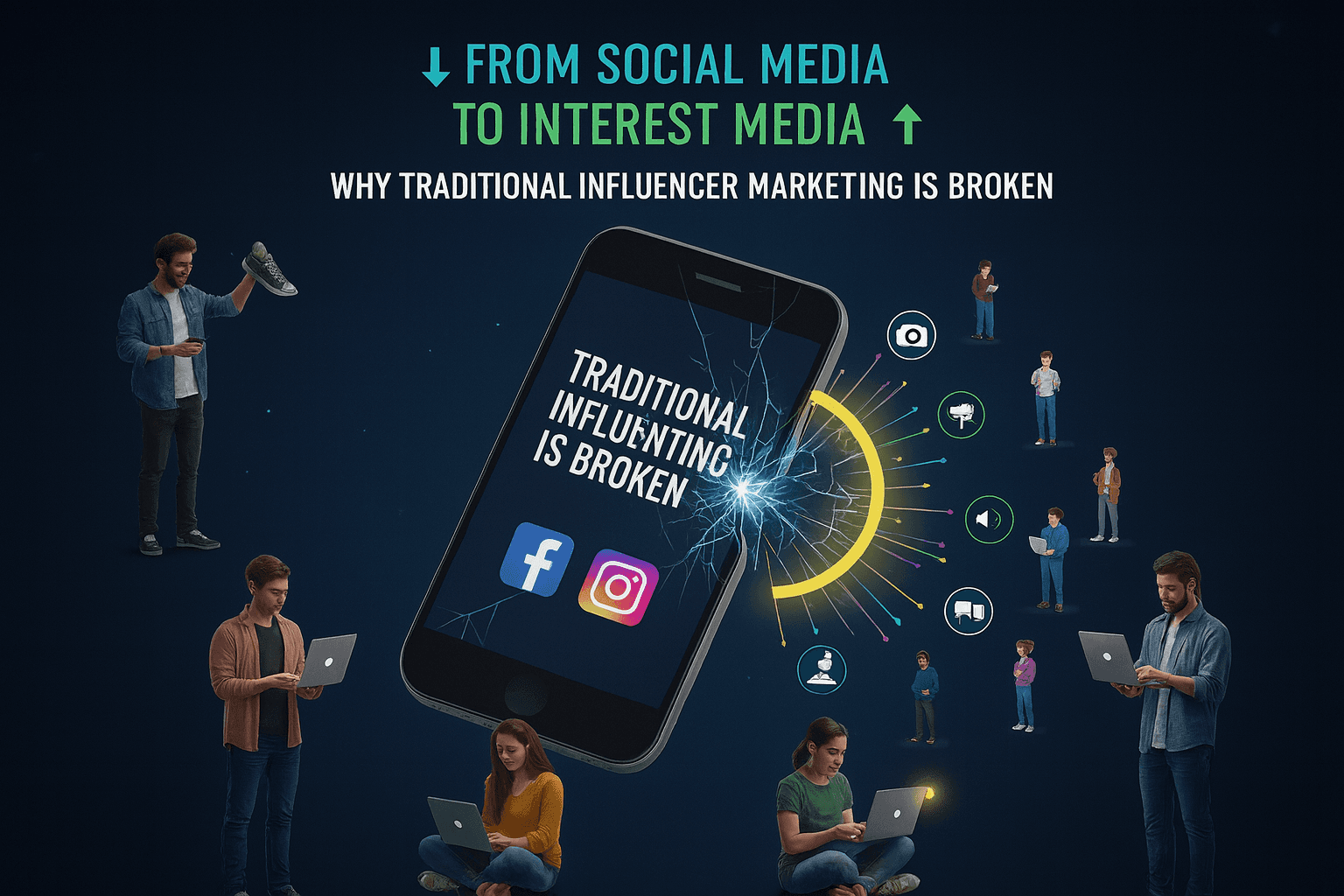
Every day, millions of people spend their influence without thinking about it.
They share what they bought, where they went, what they are wearing, what they are cooking, which product they just discovered. Friends and followers pay attention. Some of them copy those choices.
In that process, value is created. A restaurant gets new customers. A fashion label sells another dress. A supplement brand wins a new subscriber.
Who gets paid for that value today?
Mostly the platforms and, indirectly, the brands. The person who actually drove the sale is almost always left out.
Influence as an asset that is not recognised
If you think about it, influence behaves a lot like an asset:
It can be strong or weak
It can grow over time
It can be spent, wasted or invested
Yet in most systems it is not treated like one. It is treated as something vague, emotional, impossible to measure.
Linkfluencer approaches it differently. We ask:
What if influence itself was treated like a financial product, with clear rules for who gets rewarded, when, and how much?
The old payout logic
The traditional creator economy payout structure looks like this:
Platforms earn from ads and take rates on transactions
A tiny group of top creators receive cheques from brands and platforms
The broad base of users creates content and engagement for free
Most of the value sits at the top and in the middle. Very little flows to the edges where real, everyday decisions are being shaped.
It is not that platforms are "bad". Their incentives are simply aligned with keeping as much value as possible inside their own systems.
Linkfluencer’s approach
Linkfluencer’s idea is to attach a financial rail to everyday influence.
The base formula is simple:
Purchase + Post + Social Score = Payout
If you buy from a partner brand
If you publish content that hits basic quality and brand rules
If your social presence meets certain thresholds
Then you receive money in your Linkfluencer balance, which you can withdraw to your bank account.
Your influence stops being a free by product and becomes something with defined, transparent value.
How this changes behaviour for users
For customers and micro creators, this unlocks a new mindset:
They do not need to become full time influencers to benefit
They do not have to chase brand deals or send pitches
They can keep their content authentic instead of forcing every post into a scripted ad
They simply continue showing their real life, with the added benefit that some of those posts now generate financial rewards.
Influence turns into a kind of social currency. The more relevant and real your presence is, the more opportunities you have to earn from it.
How this changes behaviour for brands
For brands, treating influence as a financial product has several advantages:
You can design clear reward structures for specific behaviours
You can predict the cost of generating a given amount of social proof and demand
You build long term loyalty with customers who feel recognised, not just targeted
Instead of pouring budget only into traditional media and top tier influencers, you can allocate part of it to the people who are closest to actual purchase decisions.
A new layer for the creator economy
There will always be space for big creators and classic campaigns. Linkfluencer is not trying to replace that.
What we are building is an additional layer that:
Rewards the long tail of influence
Makes it easier to track and pay for everyday advocacy
Connects social behaviour with financial outcomes in a clean way
In that sense, turning influence into a financial product is not a slogan. It is a design choice. It is about rewiring who gets paid, when they get paid, and for what actions in the creator economy.
If we do it right, the future will not be one where only 1 percent of creators earn a living from their influence. It will be one where any customer with a voice and an audience, however small, can participate in the value they help create.
Every day, millions of people spend their influence without thinking about it.
They share what they bought, where they went, what they are wearing, what they are cooking, which product they just discovered. Friends and followers pay attention. Some of them copy those choices.
In that process, value is created. A restaurant gets new customers. A fashion label sells another dress. A supplement brand wins a new subscriber.
Who gets paid for that value today?
Mostly the platforms and, indirectly, the brands. The person who actually drove the sale is almost always left out.
Influence as an asset that is not recognised
If you think about it, influence behaves a lot like an asset:
It can be strong or weak
It can grow over time
It can be spent, wasted or invested
Yet in most systems it is not treated like one. It is treated as something vague, emotional, impossible to measure.
Linkfluencer approaches it differently. We ask:
What if influence itself was treated like a financial product, with clear rules for who gets rewarded, when, and how much?
The old payout logic
The traditional creator economy payout structure looks like this:
Platforms earn from ads and take rates on transactions
A tiny group of top creators receive cheques from brands and platforms
The broad base of users creates content and engagement for free
Most of the value sits at the top and in the middle. Very little flows to the edges where real, everyday decisions are being shaped.
It is not that platforms are "bad". Their incentives are simply aligned with keeping as much value as possible inside their own systems.
Linkfluencer’s approach
Linkfluencer’s idea is to attach a financial rail to everyday influence.
The base formula is simple:
Purchase + Post + Social Score = Payout
If you buy from a partner brand
If you publish content that hits basic quality and brand rules
If your social presence meets certain thresholds
Then you receive money in your Linkfluencer balance, which you can withdraw to your bank account.
Your influence stops being a free by product and becomes something with defined, transparent value.
How this changes behaviour for users
For customers and micro creators, this unlocks a new mindset:
They do not need to become full time influencers to benefit
They do not have to chase brand deals or send pitches
They can keep their content authentic instead of forcing every post into a scripted ad
They simply continue showing their real life, with the added benefit that some of those posts now generate financial rewards.
Influence turns into a kind of social currency. The more relevant and real your presence is, the more opportunities you have to earn from it.
How this changes behaviour for brands
For brands, treating influence as a financial product has several advantages:
You can design clear reward structures for specific behaviours
You can predict the cost of generating a given amount of social proof and demand
You build long term loyalty with customers who feel recognised, not just targeted
Instead of pouring budget only into traditional media and top tier influencers, you can allocate part of it to the people who are closest to actual purchase decisions.
A new layer for the creator economy
There will always be space for big creators and classic campaigns. Linkfluencer is not trying to replace that.
What we are building is an additional layer that:
Rewards the long tail of influence
Makes it easier to track and pay for everyday advocacy
Connects social behaviour with financial outcomes in a clean way
In that sense, turning influence into a financial product is not a slogan. It is a design choice. It is about rewiring who gets paid, when they get paid, and for what actions in the creator economy.
If we do it right, the future will not be one where only 1 percent of creators earn a living from their influence. It will be one where any customer with a voice and an audience, however small, can participate in the value they help create.
Every day, millions of people spend their influence without thinking about it.
They share what they bought, where they went, what they are wearing, what they are cooking, which product they just discovered. Friends and followers pay attention. Some of them copy those choices.
In that process, value is created. A restaurant gets new customers. A fashion label sells another dress. A supplement brand wins a new subscriber.
Who gets paid for that value today?
Mostly the platforms and, indirectly, the brands. The person who actually drove the sale is almost always left out.
Influence as an asset that is not recognised
If you think about it, influence behaves a lot like an asset:
It can be strong or weak
It can grow over time
It can be spent, wasted or invested
Yet in most systems it is not treated like one. It is treated as something vague, emotional, impossible to measure.
Linkfluencer approaches it differently. We ask:
What if influence itself was treated like a financial product, with clear rules for who gets rewarded, when, and how much?
The old payout logic
The traditional creator economy payout structure looks like this:
Platforms earn from ads and take rates on transactions
A tiny group of top creators receive cheques from brands and platforms
The broad base of users creates content and engagement for free
Most of the value sits at the top and in the middle. Very little flows to the edges where real, everyday decisions are being shaped.
It is not that platforms are "bad". Their incentives are simply aligned with keeping as much value as possible inside their own systems.
Linkfluencer’s approach
Linkfluencer’s idea is to attach a financial rail to everyday influence.
The base formula is simple:
Purchase + Post + Social Score = Payout
If you buy from a partner brand
If you publish content that hits basic quality and brand rules
If your social presence meets certain thresholds
Then you receive money in your Linkfluencer balance, which you can withdraw to your bank account.
Your influence stops being a free by product and becomes something with defined, transparent value.
How this changes behaviour for users
For customers and micro creators, this unlocks a new mindset:
They do not need to become full time influencers to benefit
They do not have to chase brand deals or send pitches
They can keep their content authentic instead of forcing every post into a scripted ad
They simply continue showing their real life, with the added benefit that some of those posts now generate financial rewards.
Influence turns into a kind of social currency. The more relevant and real your presence is, the more opportunities you have to earn from it.
How this changes behaviour for brands
For brands, treating influence as a financial product has several advantages:
You can design clear reward structures for specific behaviours
You can predict the cost of generating a given amount of social proof and demand
You build long term loyalty with customers who feel recognised, not just targeted
Instead of pouring budget only into traditional media and top tier influencers, you can allocate part of it to the people who are closest to actual purchase decisions.
A new layer for the creator economy
There will always be space for big creators and classic campaigns. Linkfluencer is not trying to replace that.
What we are building is an additional layer that:
Rewards the long tail of influence
Makes it easier to track and pay for everyday advocacy
Connects social behaviour with financial outcomes in a clean way
In that sense, turning influence into a financial product is not a slogan. It is a design choice. It is about rewiring who gets paid, when they get paid, and for what actions in the creator economy.
If we do it right, the future will not be one where only 1 percent of creators earn a living from their influence. It will be one where any customer with a voice and an audience, however small, can participate in the value they help create.
Subscribe to our newsletter for upcoming updates & news.
Support
Contact Us
Subscribe to our newsletter for upcoming features
Support
Contact Us
Subscribe to our newsletter for upcoming features
Support
Contact Us

En
En