Dec 2, 2025
What If Every Customer Was a Creator? How Linkfluencer Turns Shoppers Into Brand Marketers
What If Every Customer Was a Creator? How Linkfluencer Turns Shoppers Into Brand Marketers
What If Every Customer Was a Creator? How Linkfluencer Turns Shoppers Into Brand Marketers
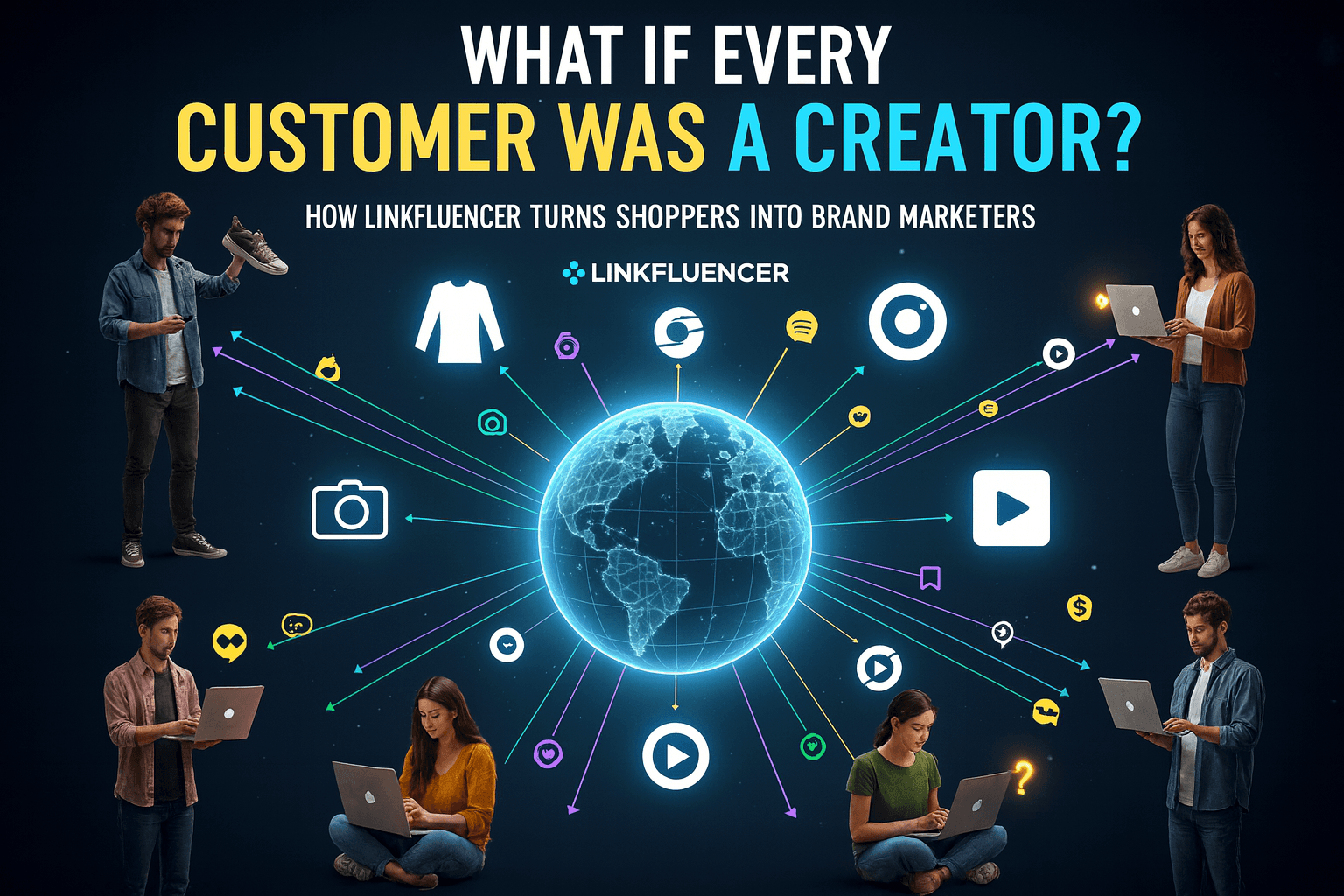
Everyone talks about the creator economy, but most people still imagine it as a small club. A few thousand influencers and celebrities with big audiences and brand deals.
The truth looks very different.
Open your feed and you will see it. Friends doing outfit videos, restaurant reviews, "come shopping with me" clips, gym routines, recipe reels, travel dumps. Most of it is unpaid. None of it is counted inside traditional influencer marketing.
Thanks to tools like CapCut, Canva and native editing on TikTok and Instagram, everyone is a potential creator.
The real supply side of the creator economy
From a brand point of view, that is an enormous untapped supply.
You already have people who:
Buy your products with their own money
Use them in daily life
Talk about them organically with their audience, even if that audience is 1,000 followers and not one million
These are the people who can create the most believable content about your brand. They do not need a script. They do not need a brief. They just show how your product fits into their real life.
Yet the classic influencer model largely ignores them. It concentrates spend at the top and leaves the broad base of customers and micro creators unrewarded.
The Linkfluencer starting point
Linkfluencer starts from a simple question:
What if every customer and every micro creator who buys from you could become a brand marketer, and get paid instantly for it like cashback?
Instead of spending everything on a small group of influencers, brands allocate a budget that rewards real buyers who:
Purchase a product
Create a post about it
Share it with their audience
We turn that into a clean engine: Shop - Post - Earn.
How it works in practice
For the creator or customer, the experience is simple:
Connect social accounts
They connect their Instagram or TikTok in the Linkfluencer app.Shop as normal
They buy from partner brands just like they usually would.Post and submit
They create a piece of content about the product, tag the brand, and upload proof of purchase inside the app.Get rewarded
Linkfluencer checks if the content and purchase meet the brand’s guidelines. If everything is approved, money appears in their Linkfluencer balance, which they can withdraw to their bank account.
There are no long negotiations, no waiting to be "selected" for a campaign. If you are a real customer with at least a modest audience, you can participate.
Why this matches real behaviour
The key is that this model does not ask people to change what they already do on social. It aligns with behaviour that already exists:
People naturally show what they buy and use
They like to recommend things that fit their identity
Their followers often copy or get inspired by those choices
The difference is that now this influence is recognised and rewarded. Not with a vague promise of affiliate commission that might never arrive, but with instant, transparent value that feels like cashback on their influence.
What brands gain
For brands, the benefits are equally clear:
You pay only when there is a real purchase and a real post
You turn genuine customers into ongoing advocates
You generate a constant stream of UGC that feels native, not staged
You no longer depend solely on a tiny group of paid influencers to carry the message
Instead of an occasional "influencer campaign", you get an always on layer of customer influence that grows with your user base.
That is the shift Linkfluencer is building toward. Not a new way to rent attention from the top 1 percent, but a way to unlock the creator potential already hiding in your customer list.
Everyone talks about the creator economy, but most people still imagine it as a small club. A few thousand influencers and celebrities with big audiences and brand deals.
The truth looks very different.
Open your feed and you will see it. Friends doing outfit videos, restaurant reviews, "come shopping with me" clips, gym routines, recipe reels, travel dumps. Most of it is unpaid. None of it is counted inside traditional influencer marketing.
Thanks to tools like CapCut, Canva and native editing on TikTok and Instagram, everyone is a potential creator.
The real supply side of the creator economy
From a brand point of view, that is an enormous untapped supply.
You already have people who:
Buy your products with their own money
Use them in daily life
Talk about them organically with their audience, even if that audience is 1,000 followers and not one million
These are the people who can create the most believable content about your brand. They do not need a script. They do not need a brief. They just show how your product fits into their real life.
Yet the classic influencer model largely ignores them. It concentrates spend at the top and leaves the broad base of customers and micro creators unrewarded.
The Linkfluencer starting point
Linkfluencer starts from a simple question:
What if every customer and every micro creator who buys from you could become a brand marketer, and get paid instantly for it like cashback?
Instead of spending everything on a small group of influencers, brands allocate a budget that rewards real buyers who:
Purchase a product
Create a post about it
Share it with their audience
We turn that into a clean engine: Shop - Post - Earn.
How it works in practice
For the creator or customer, the experience is simple:
Connect social accounts
They connect their Instagram or TikTok in the Linkfluencer app.Shop as normal
They buy from partner brands just like they usually would.Post and submit
They create a piece of content about the product, tag the brand, and upload proof of purchase inside the app.Get rewarded
Linkfluencer checks if the content and purchase meet the brand’s guidelines. If everything is approved, money appears in their Linkfluencer balance, which they can withdraw to their bank account.
There are no long negotiations, no waiting to be "selected" for a campaign. If you are a real customer with at least a modest audience, you can participate.
Why this matches real behaviour
The key is that this model does not ask people to change what they already do on social. It aligns with behaviour that already exists:
People naturally show what they buy and use
They like to recommend things that fit their identity
Their followers often copy or get inspired by those choices
The difference is that now this influence is recognised and rewarded. Not with a vague promise of affiliate commission that might never arrive, but with instant, transparent value that feels like cashback on their influence.
What brands gain
For brands, the benefits are equally clear:
You pay only when there is a real purchase and a real post
You turn genuine customers into ongoing advocates
You generate a constant stream of UGC that feels native, not staged
You no longer depend solely on a tiny group of paid influencers to carry the message
Instead of an occasional "influencer campaign", you get an always on layer of customer influence that grows with your user base.
That is the shift Linkfluencer is building toward. Not a new way to rent attention from the top 1 percent, but a way to unlock the creator potential already hiding in your customer list.
Everyone talks about the creator economy, but most people still imagine it as a small club. A few thousand influencers and celebrities with big audiences and brand deals.
The truth looks very different.
Open your feed and you will see it. Friends doing outfit videos, restaurant reviews, "come shopping with me" clips, gym routines, recipe reels, travel dumps. Most of it is unpaid. None of it is counted inside traditional influencer marketing.
Thanks to tools like CapCut, Canva and native editing on TikTok and Instagram, everyone is a potential creator.
The real supply side of the creator economy
From a brand point of view, that is an enormous untapped supply.
You already have people who:
Buy your products with their own money
Use them in daily life
Talk about them organically with their audience, even if that audience is 1,000 followers and not one million
These are the people who can create the most believable content about your brand. They do not need a script. They do not need a brief. They just show how your product fits into their real life.
Yet the classic influencer model largely ignores them. It concentrates spend at the top and leaves the broad base of customers and micro creators unrewarded.
The Linkfluencer starting point
Linkfluencer starts from a simple question:
What if every customer and every micro creator who buys from you could become a brand marketer, and get paid instantly for it like cashback?
Instead of spending everything on a small group of influencers, brands allocate a budget that rewards real buyers who:
Purchase a product
Create a post about it
Share it with their audience
We turn that into a clean engine: Shop - Post - Earn.
How it works in practice
For the creator or customer, the experience is simple:
Connect social accounts
They connect their Instagram or TikTok in the Linkfluencer app.Shop as normal
They buy from partner brands just like they usually would.Post and submit
They create a piece of content about the product, tag the brand, and upload proof of purchase inside the app.Get rewarded
Linkfluencer checks if the content and purchase meet the brand’s guidelines. If everything is approved, money appears in their Linkfluencer balance, which they can withdraw to their bank account.
There are no long negotiations, no waiting to be "selected" for a campaign. If you are a real customer with at least a modest audience, you can participate.
Why this matches real behaviour
The key is that this model does not ask people to change what they already do on social. It aligns with behaviour that already exists:
People naturally show what they buy and use
They like to recommend things that fit their identity
Their followers often copy or get inspired by those choices
The difference is that now this influence is recognised and rewarded. Not with a vague promise of affiliate commission that might never arrive, but with instant, transparent value that feels like cashback on their influence.
What brands gain
For brands, the benefits are equally clear:
You pay only when there is a real purchase and a real post
You turn genuine customers into ongoing advocates
You generate a constant stream of UGC that feels native, not staged
You no longer depend solely on a tiny group of paid influencers to carry the message
Instead of an occasional "influencer campaign", you get an always on layer of customer influence that grows with your user base.
That is the shift Linkfluencer is building toward. Not a new way to rent attention from the top 1 percent, but a way to unlock the creator potential already hiding in your customer list.
Subscribe to our newsletter for upcoming updates & news.
Support
Contact Us
Subscribe to our newsletter for upcoming features
Support
Contact Us
Subscribe to our newsletter for upcoming features
Support
Contact Us

En
En